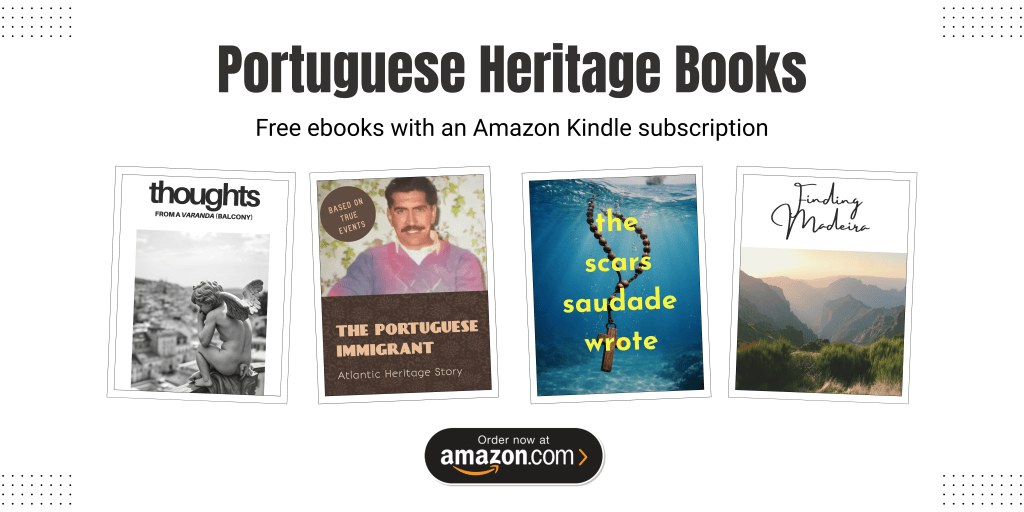

Written by Devin Meireles
Published on Senso Magazine (June 2019)
Growing up in Toronto with my Portuguese family was a blessing. I can now confidently say that as an adult when I reflect on my childhood. A stark contrast to my attitude as a youth when I didn’t appreciate what it meant to be a second generation Canadian-Portuguese.
Canada’s biggest city is home to a vibrant and engaged Portuguese community, the largest in the country with nearly two hundred thousand residents. Every weekend there are plenty of social events and gatherings that bring the community together. Cultural clubs and churches host traditional festivals that have originated back home for centuries.
My family came to Canada from Sao Miguel, Acores and would attend many of these events. These festas provided a connection to their birthplace, their homeland, and would serve as a reminder of what they left behind in order to start a new beginning in Canada. My mother would enthusiastically drag us along to these festivals to share what life was like on the island. Although for some Canadian children, like me, not everybody was as elated to be there.
I mostly thought of these events as uninteresting and inconvenient, unless a group of my cousins or schoolmates would be there. In most cases they were not because we lived on the east side of the city when the majority of Portuguese immigrants lived on the west, foreign territory for me as a youth. My mother would travel across the city every weekend for our groceries and often for these festivals. I did not know many kids other than those I would play with for the evening and never see again.
My mother would make me put on my best, most uncomfortable Sunday outfits. Keeping up appearances and dressing respectfully for the occasion was important to her. Any resistance would otherwise get me in trouble while the other children were freely rolling around in their sportswear. I always stood out from the others and it would amplify my anxiety. Participation was no better. One year I marched half-naked down the street as Saint Joseph for a parade, a less favourable memory.
I remember arriving home at the end of a festa night and my ears would be ringing. Live music that I mostly did not understand would reverberate the walls of the venue and my virgin ears while the women danced relentlessly. How could I forget how my clothes would smell like an ashtray. Before smoking indoors was outlawed, Portuguese men would chain-smoke in these banquet halls as they were accustomed. Beer and wine in hand, or both, they would socialize, eat, watch soccer, and play dominoes, the simple pleasures of any Portuguese man.
The hardest part for me was to not fully understanding what was happening and the meaning to all of it. Influenced by the other non-Portuguese kids and without a full explanation of the heritage, I did not see the value in these traditions. In my agnostic eyes, carrying a bust of a religious figure around the neighbourhood or cutting up a pig to auction off pork seemed silly to me. What was the point if I could not relate the event to mainstream media?
Into my teenage years and early twenties I ventured off, away from my Portuguese background. My friends were primarily Irish or multicultural residents of Canada for many generations past. We did not share common celebrations other than our Catholic holidays since we were away from school. They were just as unfamiliar with their history as I was and we rather adopted modern culture including rock and rap music and professional wrestling. It wasn’t until I was 23 years old when I was a little curious about my family.

I started with my ancestry and built my first pedigree chart. With the information that I knew of, I was able to get as far as my great-grandparents, three generations passed. I was intrigued. I wanted to know why their descendants would leave Portugal and how they did it. Furthermore, I wanted to know how they got to Sao Miguel Island, how long they have been there, and where they came from.
I went down the rabbit hole and began to research my family in-depth. This led me to discover the meaning of my surname and where it originated in mainland Portugal, Tras-os-Montes. Conducting interviews with aunts, uncles, and cousins, I documented what they knew. I was able to search their information on databases for any records on baptisms, marriages, and deaths.
This helped me find lost documents of my ancestors. Using a handful of genealogical websites, I was able to trace some of my lineage as far back as the eleventh century, twenty generations passed. Most importantly, I was able to draw a story of what my history was about to find and share stories, and make meaningful connections.
Into my thirties, I have embraced my family history. Both good and bad, it has all built the foundation to my existence. I now gladly attend traditional events and celebrations that shaped the people before me. I go with my parents, siblings, and in-laws. I hope to share the culture and knowledge that I have gained with future generations. God-willing, I hope to be blessed with children one day who can appreciate who we are.
I found an admiration for my heritage that was missing as a youth. While my research continues, I am still looking for details about the colonization of the island, relating to my family. Along the way I have found relatives who lived in small towns for most of their lives. Minimal opportunities and a shortlist of potential life-mates led some to never marry while others settled for their cousins. Many did not live long enough to mature, all unique stories and history in their own right. Their stories contribute to how valuable every day is and why we should be grateful for what we have today.
These generations resided in the same town has made the research somewhat easier but make no mistake, this kind of work is not simple. It takes a lot of dedication and patience when verifying this information. My studies take me through various records and genealogies to trace my lines of descent. This extraction can be difficult to determine but what I stumble on helps me demonstrate kinship between all Meireles members.
Furthermore, I enhanced my research with the inclusion of DNA testing, undeniable genetic evidence that correlates with my family records. My Portuguese heritage spans over many generations and this pursuit of family history gives me a sense of responsibility. I must preserve the past for future generations which gives me a satisfaction in accurate storytelling.

Over the years, there have been many breakthroughs that brought me to new places. Peeling away layers about myself that I otherwise had no idea about. It’s rewarding for me to uncover these stories. I have since adopted my in-laws family history and have been researching their roots from the other Portuguese archipelago, Madeira. Like every other Portuguese descendant, they came from the mainland too. As I dive further into our ancestry, I am putting together the pieces of a grand puzzle that only gets bigger. While I proceed down the rabbit hole my discoveries are like a Portuguese wine- they get better with time.Now my appreciation and gratitude grows every day.
I am proud to be a Portuguese descendant.
I am proud to be Canadian.
I am proud to be a Portuguese citizen, by birthright.
I feel blessed to know about my family heritage.
Deixe um comentário